
When a Film Has No Author: AI and the Future of Authorship
How human creative will and authorship evolve when algorithms take on the role of director, editor, and storyteller.
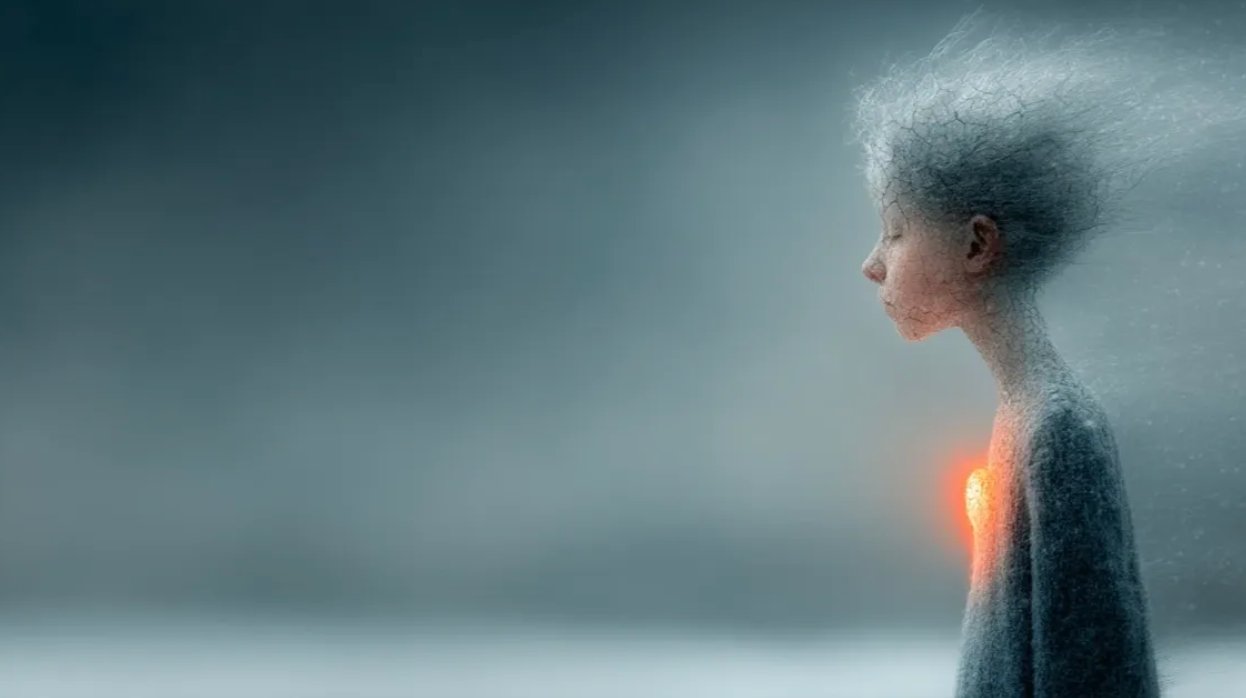
What happens to cinema when no human name stands behind the frames, and an algorithm oversees the entire process? Today, we still intuitively associate a film with its director: a beacon guiding us through the emotional landscape, setting the tone, promising a recognizable style. But what if that beacon disappears, leaving us with a film created largely by AI? Does it become genuine art, or merely a sophisticated imitation?
Algorithms today can do remarkable things: analyzing scripts, tracking audience reactions, selecting music, and even imitating a director’s “signature style.” They can produce a shot “like…” someone, gather millions of references, and seamlessly combine them. But is that enough to call the making of a film an act of artistic will?
Roland Barthes, in his Death of the Author, offers a compelling perspective: the meaning of a work emerges in the act of reading or viewing, through the audience’s attention and associations. When AI generates the form, part of the authorship shifts to us — we “complete” the meaning, breathe life into the frame with our experiences and memory. The form is provided, but filling it with meaning becomes our work.
Michel Foucault reminds us that the notion of “author” is not just a name on the cover; it’s a functional figure through which disciplines, institutions, and structures distribute meaning and responsibility. Even when the director is invisible on screen, someone shapes the model: engineers, producers, data owners, curators of training datasets. Their choices — what to train, what to exclude, what constraints to impose — define the boundaries of what is possible. Authorship remains, but dispersed and often hidden.
Consider Rogue One (2016), where Peter Cushing was digitally “resurrected.” Technically impressive; emotionally, complex: nostalgia, discomfort, amazement, and ethical unease. Technology recreated a face, but “recreating life” is not the same as reconstructing a likeness. Who gave permission to “revive” the image, who is responsible for its use, and how is it perceived — as an actor, property, or character? The debate around this digital reconstruction shows that technical virtuosity does not resolve questions of artistry and legacy — it intensifies them.
A similar dilemma arises with TV series where AI deeply analyzes prior seasons and audience data to “tailor” a new season to expectations. Formally — the style is preserved, plotlines readable; emotionally — fans often say, “We recognize the style, but not the spirit.” The difference between recognizability and impulse becomes clear: algorithms can reproduce style, not creative spark.
Algorithms can reproduce style, not creative spark.
Film historian James Morrison explored the evolution of auteur theory in Cahiers du Cinéma. He shows that critics and directors shaped the notion of a director’s signature and learned to “read the hidden hand” of the author in a film. Even within studio systems, a personal imprint can be detected — in recurring images, themes, and structural choices. For our question, this matters: the absence of a credited name does not erase the trace; in the AI era, it may be fragmented or obscured by other actors.
Social, economic, and psychological aspects are also shifting. A director’s name is symbolic capital: it attracts audiences, builds trust, and sets expectations. When the name disappears or dissolves into algorithmic oversight, the distribution of that capital changes — in favor of algorithms, studios, or platforms. Economic consequences are straightforward: revenue and rights require new allocation — who receives royalties for a model’s “voice,” images, or script contributions? Psychologically, the audience loses a guide: we go to “a Nolan film” expecting his tone; without the name, we may feel uneasy — will we lose the human hand that navigates us through the emotional terrain?
The ethical dimension is the most delicate. Algorithms optimize for “the best average” and tend to smooth out exceptions, risking the loss of what makes a work truly alive. Ethical practice demands transparency (“created/modified by AI”), respect for digital legacy (the right to regulate one’s image), and fair distribution of benefits among those whose data is used and those who shape the final artistic vision.
Legally, frameworks are emerging slowly: in most systems, copyright is still tied to a human creator, and new infrastructure is needed — licenses for digital legacy, co-authorship agreements, disclosure of training sources. But law always lags technology; in practice, culture determines: who claims curatorship, who takes creative responsibility, and how is this recorded in credits, contracts, and promotional materials.
Authorship does not die or disappear. It transforms: becoming networked, distributed, multilayered. Practical steps: credit not only the “director,” but also the “human curator/project lead,” indicate the AI model and contributors of training data; establish lifetime agreements on digital legacy; define royalty models for teams training systems; develop and adopt industry ethical codes for working with digital representations.
Current experiments illustrate this transformation. Björk’s AI-assisted music videos, for example, merge organic and AI-generated visuals: in Oral (2023), she and Rosalía appear as digital avatars in a virtual duet (Remezcla). In the animated video Victimhood, AI-generated and live visuals intertwine (Dazed Digital). Atopos uses neural networks for visual interpretation of the song (Freebeat.ai).
These works demonstrate that authorship is increasingly multilayered, networked, and co-created, yet still anchored in human intention and responsibility. Art emerges where algorithm meets human courage — where someone assumes responsibility for this collaboration.
- Barthes, Roland. The Death of the Author. Hill and Wang, 1977.
- Foucault, Michel. What is an Author? In Language, Counter-Memory, Practice, Cornell University Press, 1977.
- Morrison, James. Auteur Theory and the French New Wave. Bloomsbury, 2013.
- Writing Center, University of Pennsylvania. Roland Barthes and the Death of the Author.
- The Open University. Understanding Authorship.
- Remezcla. Björk and Rosalía appear as AI avatars on Oral.
- Dazed Digital. Animated Music Video for Björk’s Victimhood.
- Freebeat.ai. Björk Atopos AI music video.

Originally published on LinkedIn, 06.10.2025